|
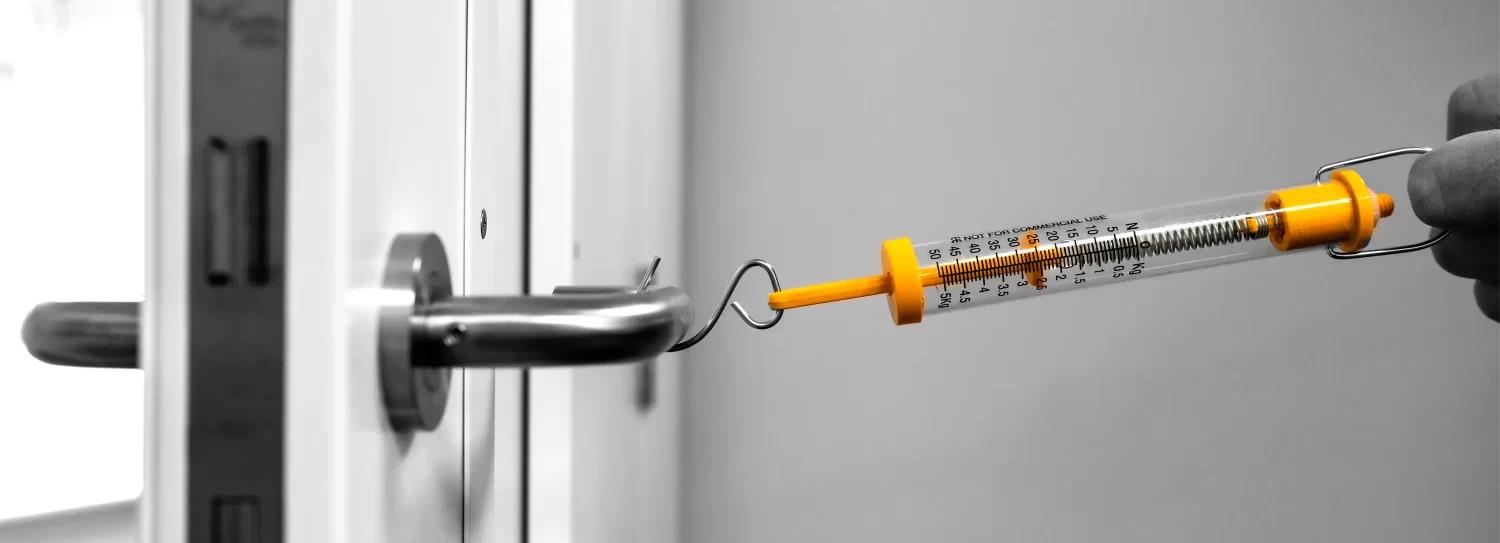
Two doors can use the same door closer, set to the same nominal power size, and still produce different opening-force readings because the closer setting is only one part of the force required to open a door. The door, its hardware, installation geometry and surrounding conditions all affect the result. BS EN 1154 and BS 8300 are relevant for different reasons: BS EN 1154 classifies and tests door closers, whereas BS 8300 provides accessibility guidance, including the effort needed to open doors. They are related, but they do not mean that two doors with the same closer setting will have the same opening force. 1. Why the opening-force readings differ1. Same closer settings do not mean identical door performance The closer’s power adjustment controls its closing torque or spring force. Actual opening resistance also depends on the door’s weight, width, hinges, seals and other hardware. Two identical closers can therefore give different readings on different doors. 2. Installation geometry and leverage The closer body and arm position, frame dimensions, mounting arrangement and opening angle affect the mechanical leverage. A change in geometry can change the force measured at the handle, even when the closer adjustment is unchanged. 3. Friction and resistance from the door assembly Hinge friction, latch engagement, tight seals, threshold contact, misalignment and floor drag can all increase the force required to open a door. These effects may have little to do with the closer itself. 4. Pressure differences and measurement technique Wind or building ventilation can create a pressure difference across the door. Readings may also vary depending on where the force gauge is applied, the direction of measurement, the opening angle and whether the reading captures an initial peak or a more sustained force. A particularly important point is that closer power size and opening force are not the same measurement. The closer must generate enough torque to close the door reliably, but the force experienced by the person opening it depends on the entire door system. 2. What BS EN 1154 actually requiresBS EN 1154 is the product standard for manually operated, controlled door-closing devices. It classifies closers according to characteristics including power size, durability, suitability for fire and smoke door assemblies, and corrosion resistance.
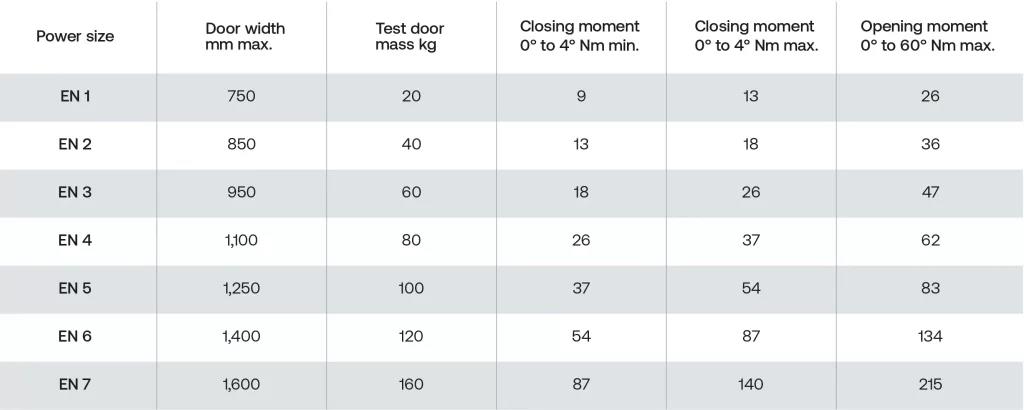
For example, a closer of power size 4 is associated with a recommended maximum door-leaf width of approximately 1,100 mm and a test door mass of 80 kg. Those figures are classification guidance, not a promise that the installed door will meet an accessibility force limit. 3. What BS 8300 has to do with itBS 8300-2 addresses the accessibility of buildings and the ability of people, including disabled people, to use doors independently. The commonly cited recommended opening-force limits for doors on accessible routes are: 30N Maximum– From 0° to 30° open – Measured at the leading edge of the door. 22.5 N Maximum– From 30° to 60° open – Measured at the leading edge of the door. – Commonly cited BS 8300-2 recommendations. Check the applicable edition and project-specific requirements. These limits concern the force required to operate the complete doorset, not just the closer. Hinges, seals, latches and pressure differences all contribute. 4. Why the two standards can appear to conflictThe closer must have enough closing force to shut the door reliably, particularly where fire-door performance is required. Yet the door must also be easy enough to open for accessibility. That creates a practical balance:
A closer can be suitable under BS EN 1154 while the installed doorset exceeds the recommended opening force under BS 8300-2. Conversely, reducing the closer’s power until the opening force is acceptable may prevent the door from latching reliably. Both requirements must be considered together where applicable.
5. A practical exampleEN-1154-power-sizes-and-moments:
The figures are illustrative, not measured results. Door width changes the leverage between closer torque and force at the leading edge; friction and air pressure add further resistance. For a given resisting torque, a longer lever arm requires less force at its end.
6. What to check when testing doorsIf two doors produce different readings, investigate them in this order:
The key takeaway is that a nominal closer setting is not an opening-force specification. BS EN 1154 addresses the closer as a product; BS 8300-2 addresses the accessibility of the installed door. Compliance must be assessed on the actual doorset, under the relevant test conditions, rather than inferred from the closer setting alone.
|